
Periodontal (gum) treatment
Periodontal (gum) treatment
“Periodontitis is an inflammatory disease caused by bacteria in the mouth.”
Saliva contains glycoproteins, which form an acquired pellicle on the tooth surface.
Bacteria gather on this pellicle to form a dental biofilm, which then develops into plaque and calculus.
When the gathered bacteria inflame and destroy the tissues around the tooth — the gingiva,
periodontal ligament and alveolar bone — that is periodontitis. So along with everyday oral care,
regular check-ups, diagnosis and periodontal treatment are important.
-
Treatment time
30 ~ 60 minutes
-
Anesthesia
Local anesthesia
-
Number of visits
3 visits
-
Average duration
1 month
-
Pain & bleeding
None
For periodontal treatment,
regular check-ups matter.
How periodontitis progresses
-
01
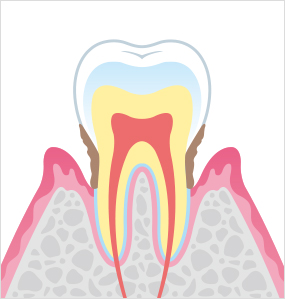
Gingivitis The gums turn red and often bleed when you brush.
They may also swell. -
02
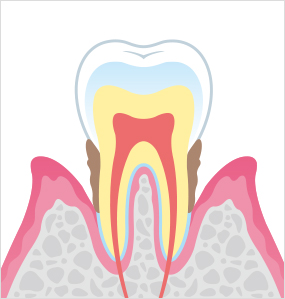
Early to moderate periodontitisBad breath worsens, the gums bleed when you brush,
and teeth feel loose. -
03
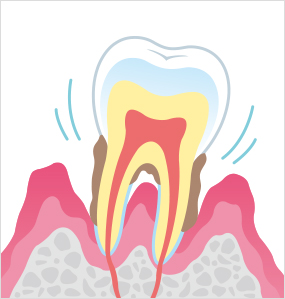
Advanced periodontitisThe gums discharge pus or swell, and
the bone dissolves so the teeth become loose.
Types of periodontal treatment
-
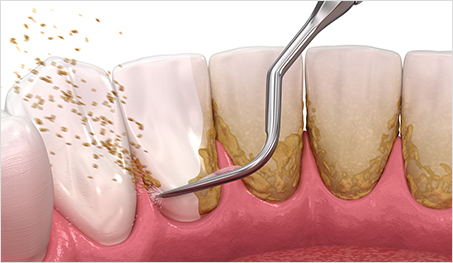
Professional cleaning (scaling)
This is the first-line periodontal treatment for preventing gum disease.
Ultrasonic instruments remove plaque, calculus and deposits from the tooth surface. -
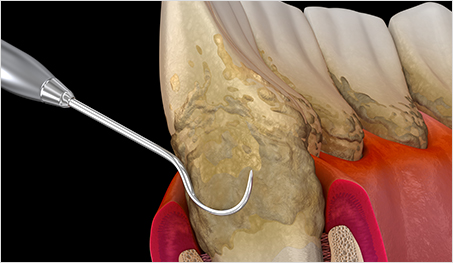
Subgingival curettage (gum treatment)
This is considered after professional cleaning when periodontitis has progressed.
The gum is locally anesthetized and instruments are used to remove
calculus and inflamed tissue below the gumline directly. -
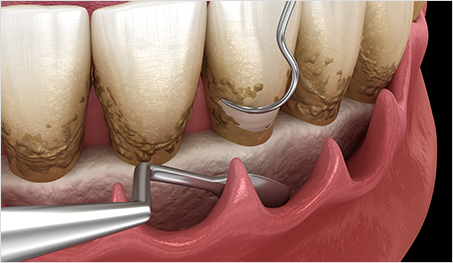
Flap curettage (gum surgery)
This is considered when periodontitis is far advanced and gum treatment
cannot reach the area.
The gum is incised to expose the tooth root and the bone,
then calculus and inflamed tissue are removed.
How to prevent gum disease
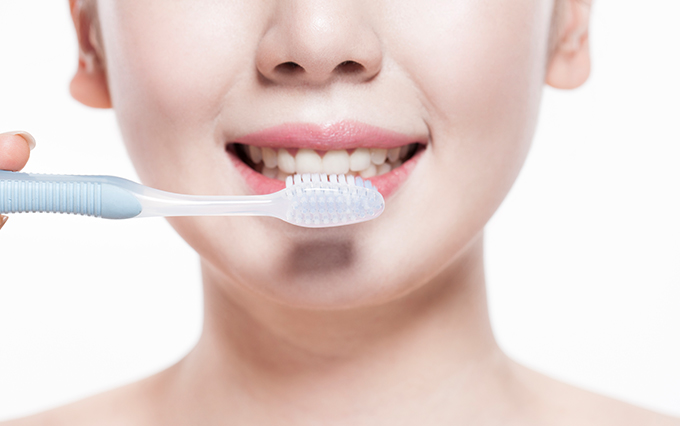
With good brushing habits and regular professional cleaning alone,
a great deal of gum disease
can be prevented.
In practice, though, many people do not brush correctly, and calculus forms even when they do.
Gum disease also causes little pain or noticeable symptoms until it has progressed some way.
So it is important to visit the clinic to have your brushing habits and gum condition checked and to have your teeth cleaned regularly.
D-day clinic information
D-DAY Contact
Address
10F, Hwanam Building, 337 Teheran-ro, Gangnam-gu, Seoul (서울특별시 강남구 테헤란로 337 화남빌딩 10F) — in front of Exit 6, Seolleung Station
Clinic hours
-
Mon / Thu / Fri10:00 ~ 19:00Saturday10:00 ~ 14:00
-
Tue / Wed10:00 ~ 21:00Lunch break13:00 ~ 14:00
*Saturday: open through lunch, no lunch break.
*Closed on Sundays.
*Public holiday hours are announced separately.